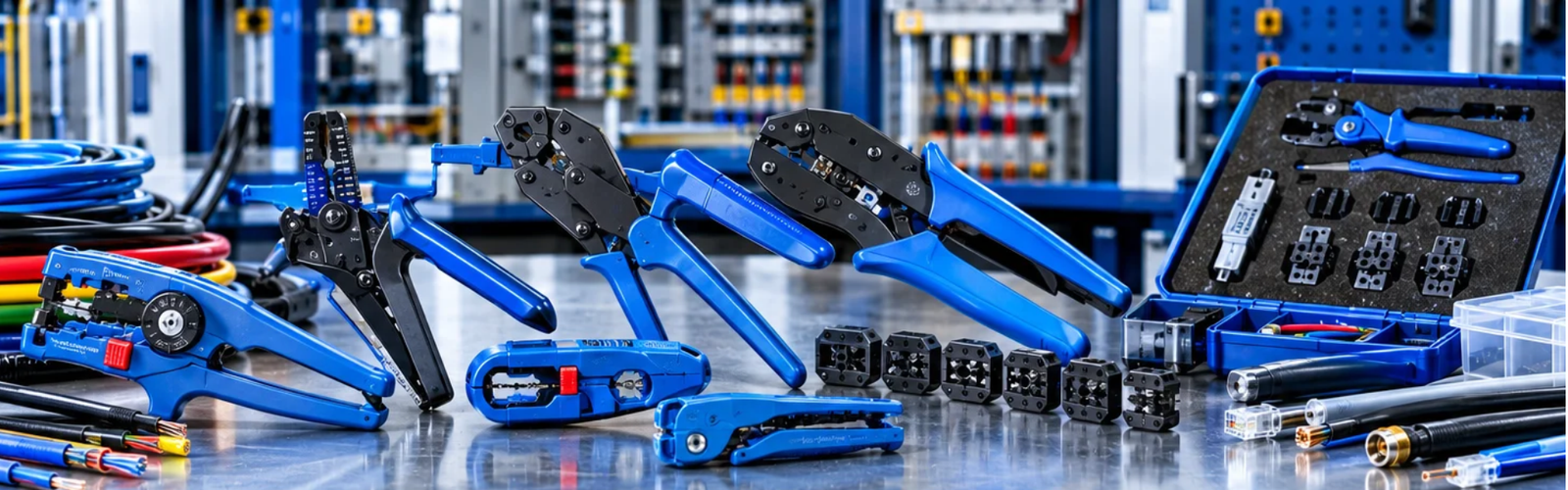
Complete Guide to Cable Preparation Tools: Types, Applications, Benefits & How to Choose the Right Tool
Admin
|
15 Oct 2026
|
13 min read
|
30 views
Complete Guide to Cable Preparation Tools: Types, Applications, Benefits & How to Choose the Right Tool
Introduction
Proper cable preparation is one of the most important steps in electrical installation, industrial automation, control panel assembly and equipment maintenance. Before a cable can be terminated, connected, crimped or installed, it often needs to be cut, stripped, prepared and handled correctly.
Using the right cable preparation tools can make this process faster, more accurate and more consistent. The right tools can also help technicians achieve cleaner cable preparation while reducing unnecessary damage to conductors, insulation and cable components.
For electricians, electrical contractors, automation engineers, maintenance teams, panel builders, OEM manufacturers and industrial technicians, professional cable preparation equipment can become an essential part of everyday work.
In this comprehensive guide, we will explain what cable preparation tools are, the different types available, where they are used, why professional tools matter, common cable preparation mistakes, and how to select the right tools for your application.
What Are Cable Preparation Tools?
Cable preparation tools are specialised tools designed to prepare electrical cables and wires before installation, termination or connection.
Depending on the type of cable and application, preparation may involve:
- Cutting cables to the required length
- Removing outer cable jackets
- Stripping insulation
- Removing individual wire insulation
- Preparing conductors for terminals
- Removing cable shielding
- Preparing cables for connectors
- Creating clean and precise cable ends
- Preparing cables for crimping or termination
Cable preparation is particularly important in industrial environments because electrical and automation systems often contain large numbers of cables that must be prepared consistently.
A professional cable preparation tool is designed to perform a specific task accurately while helping the technician work efficiently.
Why Is Proper Cable Preparation Important?
Cable preparation may appear to be a simple process, but incorrect preparation can create problems during installation and operation.
A poorly prepared cable can potentially result in:
- Damaged conductors
- Excessive removal of insulation
- Uneven stripping
- Poor terminal connections
- Difficult installation
- Increased installation time
- Inconsistent workmanship
- Rework and material wastage
- Potential reliability issues
For industrial businesses, these problems can become more significant when hundreds or thousands of cables are prepared during a project.
Using appropriate professional cable preparation tools allows technicians to perform repetitive cable preparation tasks with greater consistency.
Main Types of Cable Preparation Tools
There is no single tool that is suitable for every cable.
Different cables, conductor sizes, insulation materials and applications require different preparation methods.
The most common categories include:
- Cable cutters
- Wire stripping tools
- Cable stripping tools
- Jacket removal tools
- Insulation stripping tools
- Cable preparation tools for specialised cables
- Crimping and termination tools
- Cable identification and preparation accessories
Let's look at each category in more detail.
1. Cable Cutters
Cable cutters are designed to cut electrical cables and wires cleanly to the required length.
A suitable cable cutter can help create a clean cable end before further preparation.
Cable cutters are available in different designs depending on the cable diameter, conductor material and application.
Common applications include:
- Electrical installations
- Control panel wiring
- Industrial automation
- Building services
- Manufacturing
- Equipment assembly
- Maintenance work
- Telecommunications
When selecting a cable cutter, consider the maximum cable diameter and type of conductor the tool is designed to handle.
Using a tool outside its intended capacity can result in poor cutting performance and unnecessary tool wear.
2. Wire Stripping Tools
Wire stripping tools are used to remove insulation from individual wires while leaving the conductor ready for termination or connection.
A wire stripper can be particularly useful when preparing wires for:
- Terminal blocks
- Connectors
- Electrical panels
- Switchgear
- Control systems
- Sensors
- Automation equipment
- Electrical equipment
The stripping process needs to remove the required amount of insulation without unnecessarily damaging the conductor underneath.
For technicians working with multiple wire sizes, a versatile wire stripping tool can significantly simplify the preparation process.
3. Cable Stripping Tools
Cable stripping tools are designed for removing outer insulation or jackets from cables.
Unlike basic wire stripping, cable stripping can involve working with thicker and more complex cable constructions.
Industrial cables may contain several layers, such as:
- Outer jacket
- Shielding
- Insulation
- Individual conductors
- Protective layers
The correct cable stripping method depends on the construction of the cable and the requirements of the application.
Professional cable stripping tools are designed to provide more controlled preparation than improvised methods.
4. Jacket Removal Tools
Some cables require the removal of an outer jacket before the internal conductors or shielding can be accessed.
Jacket removal tools are designed specifically for this purpose.
They can be used in applications such as:
- Industrial control wiring
- Electrical installation
- Panel building
- Automation systems
- Equipment maintenance
- Cable assembly
The correct depth and cutting method are important because the technician needs to remove the jacket without unnecessarily damaging the layers underneath.
5. Insulation Stripping Tools
Insulation stripping tools remove insulation from electrical conductors.
These tools can be manual, automatic or application-specific.
The ideal tool depends on factors such as:
- Conductor size
- Insulation material
- Wire construction
- Required stripping length
- Quantity of wires
- Installation environment
For repetitive industrial work, a tool that allows consistent stripping can improve productivity and reduce variation between cable assemblies.
6. Specialised Cable Preparation Tools
Some applications require specialised tools because standard wire strippers may not be suitable.
Specialised cable preparation tools can be designed for particular cable constructions, dimensions or preparation requirements.
These tools are commonly used in professional electrical and industrial environments where accuracy and repeatability are important.
Before purchasing a specialised tool, identify the exact cable type and preparation procedure required for your application.
7. Crimping and Termination Tools
Cable preparation does not always end with stripping.
After the conductor has been prepared, it may need to be terminated using:
- Cable lugs
- Ferrules
- Terminals
- Connectors
- Contacts
Crimping tools are designed to create the required connection between the conductor and terminal.
The correct preparation and termination process should always follow the requirements of the cable, terminal and equipment manufacturer.
Cable Preparation Tools for Industrial Automation
Industrial automation systems depend heavily on reliable electrical connections.
Automation installations can contain:
- Sensors
- PLCs
- HMIs
- Control panels
- Motors
- Drives
- Actuators
- Switches
- Safety systems
- Industrial communication systems
These systems may require large numbers of cables to be prepared and terminated during installation and maintenance.
Professional cable preparation tools can help technicians handle these repetitive tasks efficiently.
For automation integrators and panel builders, selecting appropriate tools for the cable types being used can help create a more consistent installation process.
Cable Preparation Tools for Control Panels
Control panel construction often involves preparing a significant number of individual wires.
Technicians may need to:
- Measure the required wire length
- Cut the wire
- Strip the insulation
- Install a ferrule or terminal
- Crimp the terminal
- Label the wire
- Connect the wire to the appropriate terminal
When these processes are repeated across an entire control panel, tool quality and consistency become important.
A suitable wire stripping tool can make repetitive preparation tasks easier and more efficient.
Cable Preparation in Electrical Installations
Electricians and electrical contractors regularly work with cables of different sizes and constructions.
Depending on the installation, they may need to prepare cables for:
- Switchboards
- Distribution systems
- Control equipment
- Electrical machinery
- Industrial equipment
- Building services
- Control panels
- Electrical connections
The correct tool should always be selected according to the cable specification and intended application.
Cable Preparation for OEM Manufacturers
Original Equipment Manufacturers often prepare cables repeatedly as part of equipment assembly.
For OEMs, cable preparation can become a production process rather than an occasional maintenance task.
This creates additional requirements for:
- Repeatability
- Productivity
- Consistent preparation
- Operator efficiency
- Tool durability
- Process control
A suitable professional cable preparation system can help standardise repetitive cable preparation processes.
Cable Preparation for Maintenance Teams
Maintenance technicians often need to repair, replace or modify wiring as part of equipment maintenance.
A professional cable tool kit can be useful for responding to different maintenance requirements.
Typical maintenance tasks can include:
- Replacing damaged cables
- Preparing replacement wires
- Repairing control circuits
- Modifying control panels
- Replacing connectors
- Installing sensors
- Replacing electrical components
Having appropriate cable preparation tools readily available can help technicians complete these tasks efficiently.
Manual vs Automatic Cable Preparation Tools
Cable preparation tools can generally be divided into manual and more automated designs.
Manual Tools
Manual tools are operated directly by the technician.
Advantages
- Simple operation
- Portable
- Easy to carry
- Suitable for maintenance work
- Useful for smaller quantities
- Generally easy to deploy
Manual tools can be appropriate for technicians who work across multiple locations or perform occasional cable preparation.
Automatic or Self-Adjusting Tools
Some professional stripping tools provide mechanisms designed to simplify repetitive stripping operations.
Potential advantages include:
- Faster repetitive work
- Consistent stripping
- Reduced manual adjustment
- Easier handling of different wire sizes
- Improved operator efficiency
The correct choice depends on the application, cable types and volume of work.
How to Choose the Right Cable Preparation Tool
Choosing the right tool begins with understanding the cable and the job.
Consider the following factors.
1. Cable Type
Identify exactly what type of cable you are working with.
Consider:
- Single-core wire
- Multi-core cable
- Flexible cable
- Control cable
- Shielded cable
- Coaxial cable
- Specialised industrial cable
Different cable constructions require different preparation methods.
2. Cable Size
Cable size is one of the most important factors when choosing a stripping or cutting tool.
Check the tool's specified working range and compare it with the cable size you intend to prepare.
3. Insulation Material
Different insulation materials can behave differently during stripping.
The tool should be appropriate for the insulation type being processed.
4. Required Stripping Length
Some applications require a specific length of exposed conductor.
A tool that provides controlled and repeatable stripping can be particularly useful for repetitive assembly work.
5. Volume of Work
Consider how frequently the tool will be used.
For occasional maintenance:
A compact manual tool may be sufficient.
For repetitive production:
A professional tool designed for efficiency and repeatability may be more appropriate.
6. Working Environment
Consider where the tool will be used.
For example:
- Workshop
- Factory
- Control panel assembly area
- Construction site
- Maintenance facility
- Field service environment
Portability and tool durability can become important factors for mobile technicians.
Common Cable Preparation Mistakes
Even with a good tool, incorrect technique can create problems.
Here are some common mistakes to avoid.
Mistake 1: Using the Wrong Tool
A tool designed for small wires may not be appropriate for larger industrial cables.
Always check the manufacturer's specifications.
Mistake 2: Damaging the Conductor
Cutting too deeply into the insulation can potentially damage the conductor.
The goal is to remove the required insulation while maintaining the integrity of the conductor.
Mistake 3: Removing Too Much Insulation
Exposing more conductor than necessary can create installation and termination issues.
Follow the requirements of the terminal or connector being used.
Mistake 4: Using Improvised Tools
Using knives or unsuitable cutting tools may result in inconsistent preparation or accidental damage.
Professional cable preparation tools are designed specifically for controlled cable preparation.
Mistake 5: Ignoring Cable Construction
A cable may contain several layers and components.
Before stripping, understand the cable construction and the manufacturer's recommended preparation method.
Benefits of Professional Cable Preparation Tools
Investing in appropriate professional tools can provide several operational benefits.
Better Consistency
Professional tools can help technicians achieve more consistent preparation.
Improved Productivity
A suitable tool can reduce the time required for repetitive preparation tasks.
Reduced Rework
Consistent preparation can help reduce unnecessary rework caused by incorrectly prepared cables.
Better Workmanship
Purpose-built tools can provide greater control than improvised methods.
Improved Operator Experience
Ergonomically designed tools can make repetitive tasks easier to perform.
Long-Term Value
Quality tools designed for professional applications can be suitable for repeated use across demanding work environments.
Cable Preparation Tools in Industrial Automation Projects
Cable preparation is an important part of automation installation.
Consider a typical automation project involving a production machine.
The project may require cables for:
- Sensors
- Motors
- Drives
- Control panels
- Emergency stops
- Actuators
- PLC inputs and outputs
- Communication systems
Each cable may need to be cut, stripped, labelled and terminated.
A well-organised cable preparation process can therefore contribute to efficient installation and commissioning.
For automation integrators, having the right tools available can help technicians work systematically through large numbers of connections.
Cable Preparation and Electrical Safety
Cable preparation should always be carried out using appropriate tools and safe working procedures.
Before working on electrical cables:
- Isolate the relevant electrical equipment.
- Follow applicable workplace safety procedures.
- Confirm that the circuit is safe to work on.
- Use tools appropriate for the application.
- Follow cable and equipment manufacturer instructions.
- Use appropriate personal protective equipment where required.
- Ensure the completed connection meets the applicable requirements.
Electrical work should be performed by appropriately qualified personnel where required.
How to Build a Professional Cable Preparation Tool Kit
A basic professional toolkit can be built around the requirements of the work being performed.
Depending on the application, a cable preparation toolkit may include:
Cable Cutters
For cutting wires and cables to the required length.
Wire Strippers
For removing insulation from individual conductors.
Cable Stripping Tools
For preparing larger or more complex cables.
Crimping Tools
For terminating conductors with suitable terminals, ferrules or connectors.
Cable Preparation Accessories
For specific cable types and applications.
Measuring and Identification Tools
For accurate cable preparation, identification and installation.
The exact toolkit should be based on the cables, terminals and equipment used by the technician or business.
Why Tool Selection Matters for Australian Industrial Businesses
Australian industrial businesses operate across diverse sectors including manufacturing, mining, infrastructure, electrical contracting, automation, engineering and equipment maintenance.
These environments can involve demanding operating conditions and complex electrical systems.
For businesses that regularly prepare cables, selecting professional tools suited to the application can support:
- Efficient installation
- Consistent workmanship
- Faster maintenance
- Reduced preparation errors
- Better workflow organisation
- Professional cable assembly
The right tool is therefore not simply an accessory. It can become an important part of an efficient electrical and industrial workflow.
Choosing Professional Cable Preparation Tools from Spleca
Spleca supplies industrial and engineering products for businesses across Australia, including professional solutions for cable preparation and electrical applications.
When selecting cable preparation equipment, our team can help you identify products based on your application and requirements.
Whether you are an:
- Electrician
- Electrical contractor
- Automation engineer
- Maintenance technician
- Control panel builder
- OEM manufacturer
- Industrial engineer
- Automation integrator
we can help you find suitable industrial tools and solutions for your work.
Explore our range of cable preparation tools, wire stripping tools and industrial products to find the right solution for your application.
Frequently Asked Questions About Cable Preparation Tools
What are cable preparation tools used for?
Cable preparation tools are used to cut, strip, remove insulation, prepare jackets and otherwise prepare electrical cables before termination, installation or connection.
What is the difference between a wire stripper and a cable stripper?
A wire stripper is generally used to remove insulation from individual wires, while cable stripping tools are designed for preparing larger or more complex cable constructions.
How do I choose the right wire stripping tool?
Consider the wire size, insulation type, required stripping length, frequency of use and application. Always verify that the tool's specifications match the wire being processed.
Can cable preparation tools be used for industrial automation?
Yes. Cable preparation tools are commonly used when installing and maintaining automation systems, control panels, sensors, motors, drives and other industrial electrical equipment.
Are professional cable preparation tools worth buying?
For technicians and businesses that regularly prepare cables, professional tools can provide improved consistency, efficiency, usability and long-term value compared with unsuitable or improvised tools.
What tools are required for cable preparation?
Depending on the application, a toolkit may include cable cutters, wire strippers, cable stripping tools, crimping tools and specialised preparation tools.
Can Spleca help me select the right cable preparation tool?
Yes. Spleca can assist businesses in identifying suitable industrial and cable preparation products based on their application and requirements.
Conclusion
Cable preparation is a fundamental part of electrical installation, industrial automation, control panel assembly, equipment manufacturing and maintenance.
The quality of the preparation process can influence the efficiency and consistency of the subsequent installation and termination work. Using the correct cable preparation tools helps technicians perform tasks such as cutting, stripping and cable preparation with greater control and repeatability.
From basic wire stripping to specialised industrial cable preparation, the most important consideration is always selecting a tool that is appropriate for the cable, application and working environment.
For electricians, automation engineers, maintenance teams, OEM manufacturers and industrial businesses, investing in suitable professional cable preparation equipment can make everyday work more efficient and organised.
Looking for professional cable preparation tools in Australia?
Explore Spleca's range of industrial tools and cable preparation solutions or contact our technical team for assistance in selecting the right product for your application.
Explore More
Cable Preparation Tools
Wire Stripping Tools
WEICON Products
Industrial Automation Products
Electrical Components
Industrial Maintenance Products
Technical Sprays
Industrial Chemicals
Explore Industrial Automation Products