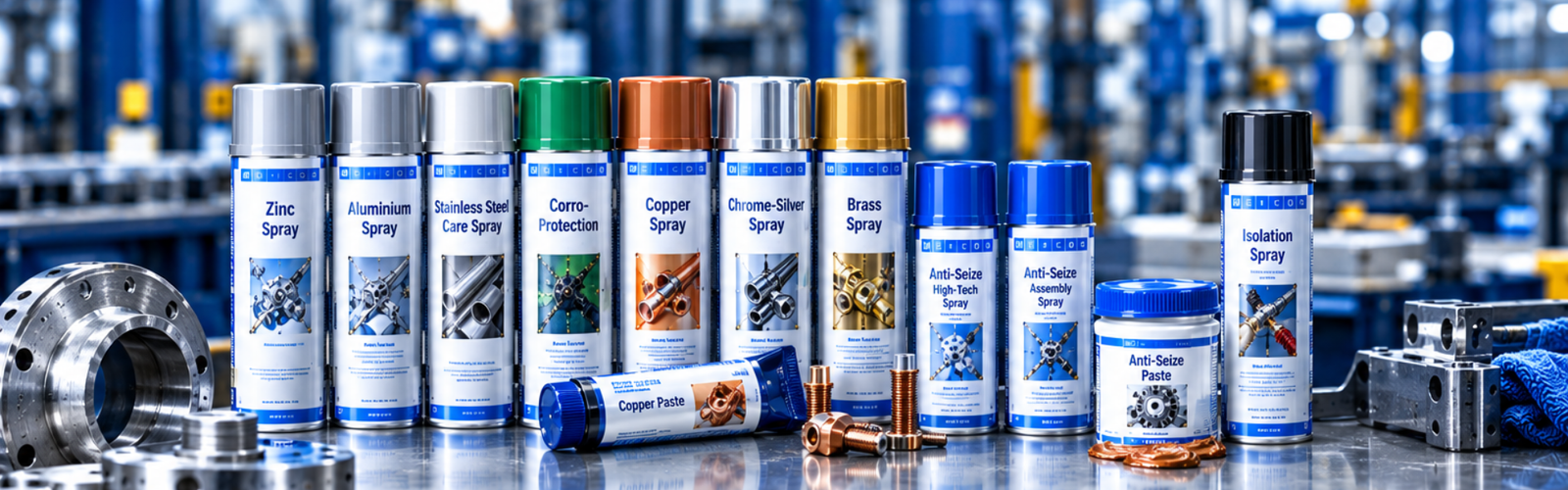
Corrosion Protection for Industrial Equipment
Admin
|
14 Oct 2026
|
11 min read
|
6 views
Corrosion Protection for Industrial Equipment: Complete Guide
Corrosion is one of the most common maintenance challenges faced by industrial businesses.
Industrial machinery, tools, components and metal structures can be exposed to moisture, humidity, chemicals, salt, water, temperature changes and outdoor conditions. Over time, these factors can cause metal surfaces to deteriorate.
For factories and industrial facilities, corrosion is more than a cosmetic problem. Depending on the equipment and severity, corrosion can affect:
- Equipment condition
- Component performance
- Maintenance requirements
- Mechanical assemblies
- Surface integrity
- Equipment service life
This is why corrosion protection for industrial equipment should be considered an important part of an effective maintenance strategy.
In this guide, we explain what industrial corrosion is, why it occurs, how it affects equipment and the different approaches businesses can use to help protect suitable metal surfaces.
What Is Corrosion?
Corrosion is the deterioration of a material, particularly metal, as a result of chemical or electrochemical reactions with its surrounding environment.
For common ferrous metals, corrosion can result in the formation of rust.
Corrosion can occur when metal is exposed to environmental conditions such as:
- Moisture
- Water
- Oxygen
- Humidity
- Salt
- Industrial chemicals
- Pollutants
The rate and severity of corrosion depend on the material and environment.
Why Is Corrosion a Problem for Industrial Equipment?
Industrial equipment often represents a significant investment.
Corrosion can affect:
- Machinery
- Tools
- Fasteners
- Mechanical components
- Metal structures
- Spare parts
- Storage equipment
- Outdoor equipment
If corrosion is ignored, maintenance teams may eventually have to deal with more difficult cleaning, component replacement or repair.
A proactive corrosion-management strategy can therefore help identify and address corrosion risks before they become more serious.
What Causes Industrial Corrosion?
Several environmental and operating conditions can contribute to corrosion.
1. Moisture
Water is one of the most common contributors to corrosion.
Equipment exposed to:
- Rain
- Condensation
- Water
- Humidity
- Washdown processes
may require additional corrosion protection depending on the material and environment.
2. Humidity
High humidity can increase the risk of corrosion, particularly when moisture remains on metal surfaces for extended periods.
This can be particularly relevant in:
- Coastal environments
- Warehouses
- Outdoor storage
- Processing facilities
- Areas with poor ventilation
3. Salt
Salt-containing environments can be particularly aggressive toward susceptible metals.
This makes corrosion management especially important for equipment exposed to:
- Coastal air
- Saltwater
- Road salt
- Marine environments
4. Industrial Chemicals
Certain chemicals and process environments can contribute to corrosion.
Factories should therefore consider the specific chemicals and environmental conditions surrounding their equipment.
5. Poor Storage
Even equipment that is not currently in operation can be vulnerable to corrosion.
Spare parts, tools and machinery stored in unsuitable conditions may be exposed to:
- Humidity
- Condensation
- Dust
- Water
- Temperature fluctuations
Proper storage and suitable protection can help reduce these risks.
Types of Industrial Corrosion
Corrosion does not always appear in the same form.
Common forms include:
Uniform Corrosion
Corrosion occurs relatively evenly across a metal surface.
Pitting Corrosion
Small, localised areas of corrosion form pits in the surface.
Crevice Corrosion
Corrosion develops in narrow gaps or areas where moisture and contaminants can accumulate.
Galvanic Corrosion
Different metals in electrical contact can contribute to galvanic corrosion under suitable environmental conditions.
Stress Corrosion
Certain combinations of stress and environmental conditions can contribute to cracking and corrosion.
The appropriate inspection and protection strategy depends on the type of corrosion and equipment involved.
Corrosion Protection Methods
There is no single corrosion-protection method suitable for every application.
Industrial businesses may use a combination of:
- Protective coatings
- Corrosion protection sprays
- Corrosion inhibitors
- Lubricants with protective properties
- Proper storage
- Cleaning
- Environmental control
- Regular inspection
- Material selection
1. Corrosion Protection Sprays
Corrosion protection sprays are commonly used for suitable metal surfaces.
Depending on the formulation, they may create a protective film that helps reduce exposure to moisture and other environmental factors.
Potential applications include:
- Machinery
- Tools
- Fasteners
- Metal components
- Spare parts
- Equipment during storage
Always check the product's intended application and compatibility.
2. Anti-Corrosion Coatings
Protective coatings can provide a physical barrier between a metal surface and the surrounding environment.
Depending on the application, coatings may be used on:
- Machinery
- Metal structures
- Industrial components
- Outdoor equipment
The appropriate coating depends on:
- Metal type
- Environment
- Temperature
- Chemical exposure
- Required durability
3. Corrosion Inhibitors
Corrosion inhibitors are substances designed to reduce corrosion under specific conditions.
They can be used in certain:
- Industrial systems
- Process environments
- Fluids
- Storage applications
The correct inhibitor depends on the system and the corrosion mechanism involved.
4. Protective Lubricants
Some lubricants also provide corrosion protection.
These products can be useful when a component requires both:
Lubrication + Protection
For example, certain mechanical components may require lubrication while also being exposed to moisture.
However, a dedicated corrosion-protection product may be more appropriate where corrosion protection is the primary objective.
5. Proper Equipment Storage
Corrosion prevention starts before equipment is placed into storage.
Where appropriate:
- Keep equipment dry.
- Avoid unnecessary moisture exposure.
- Protect exposed metal surfaces.
- Use suitable corrosion-protection products.
- Inspect stored equipment periodically.
- Follow manufacturer storage instructions.
This is particularly important for expensive spare parts and machinery that may remain unused for extended periods.
6. Regular Cleaning
Contamination can contribute to corrosion in some environments.
Maintenance teams should inspect equipment for:
- Dirt
- Oil
- Chemical residues
- Salt deposits
- Moisture
- Process contamination
Suitable cleaning products can help remove contamination before appropriate protective treatment is applied.
7. Regular Inspection
Corrosion protection should not be a one-time activity.
Regular inspections can help identify:
- Discolouration
- Surface rust
- Pitting
- Peeling coatings
- Corroded fasteners
- Damaged protective films
Early detection can make maintenance easier.
Corrosion Protection for Different Industrial Equipment
Different equipment may require different approaches.
Machinery
Machinery can contain numerous metal components exposed to:
- Moisture
- Lubricants
- Chemicals
- Dust
- Temperature changes
Regular inspection and suitable protective products can help manage corrosion risk.
Tools
Hand tools and workshop tools are often exposed to moisture and handling.
Suitable corrosion protection can help maintain tools during storage.
Fasteners
Bolts, nuts and other fasteners can be particularly vulnerable in harsh environments.
Corroded fasteners can become difficult to remove and may complicate maintenance work.
Spare Parts
Spare components may remain unused for months or years.
Storage conditions and suitable corrosion protection should therefore be considered.
Outdoor Equipment
Outdoor equipment is exposed to changing weather conditions.
Rain, humidity, condensation and environmental contaminants can increase corrosion risk.
Corrosion Protection in Coastal Areas
Australian coastal environments can present additional corrosion challenges because of exposure to salt-laden air.
Businesses operating near the coast may need to pay particular attention to:
- Outdoor machinery
- Metal structures
- Tools
- Fasteners
- Storage areas
- Vehicles and equipment
A corrosion-management program may include more frequent inspection and suitable protective treatments.
Corrosion Protection for Stored Machinery
Machinery that is temporarily out of service can still deteriorate.
Before storing equipment, maintenance teams should consider:
Cleaning
Remove dirt, oil, salts and other contaminants where appropriate.
Drying
Ensure surfaces are appropriately dry before storage.
Protection
Apply a suitable corrosion-protection product if recommended.
Environment
Store equipment in conditions appropriate for the machinery and materials.
Inspection
Periodically inspect stored machinery for signs of corrosion.
How to Remove Existing Rust
Corrosion protection is primarily preventive, but existing rust may need to be addressed first.
Depending on the severity and material, methods can include:
- Mechanical cleaning
- Suitable rust-removal products
- Abrasive cleaning
- Surface treatment
- Replacement of severely damaged components
After rust has been removed, the surface may require:
- Cleaning
- Drying
- Protective coating
- Corrosion inhibitor
- Suitable lubricant
The appropriate process depends on the component and level of corrosion.
Rust Removal vs Corrosion Protection
These two processes are often confused.
Rust Removal
The objective is to remove existing corrosion.
Corrosion Protection
The objective is to reduce the likelihood or rate of future corrosion.
A maintenance process may therefore involve:
Inspect → Remove corrosion → Clean → Dry → Protect → Monitor
How to Select a Corrosion Protection Product
Before selecting an industrial corrosion protection product, consider the following.
Metal Type
Is the component made from:
- Carbon steel?
- Stainless steel?
- Aluminium?
- Other metal?
Environment
Will it be exposed to:
- Water?
- Humidity?
- Salt?
- Chemicals?
- Outdoor conditions?
Temperature
What temperatures will the product and protected component experience?
Duration
Is the protection required for:
- Short-term storage?
- Long-term storage?
- Regular operation?
- Transportation?
Surface Condition
Is the surface:
- Clean?
- Rusted?
- Painted?
- Coated?
- Oily?
Compatibility
Will the product affect:
- Rubber?
- Plastic?
- Paint?
- Seals?
- Other coatings?
Always check the product's technical documentation before use.
Industrial Corrosion Protection Products
A maintenance department may use different types of products depending on the application.
These can include:
- Anti-corrosion sprays
- Protective coatings
- Corrosion inhibitors
- Protective oils
- Maintenance lubricants
- Rust removers
- Surface cleaners
- Protective films
No single product should be assumed to work for every environment or metal.
Corrosion Protection and Preventive Maintenance
A good preventive maintenance program should incorporate corrosion inspection.
A basic process can include:
Step 1: Identify Vulnerable Equipment
Determine which machinery and components are most exposed to corrosion.
Step 2: Assess the Environment
Consider moisture, chemicals, salt and temperature.
Step 3: Inspect
Look for early signs of corrosion.
Step 4: Clean
Remove contamination using an appropriate cleaning method.
Step 5: Treat
Remove existing corrosion where necessary.
Step 6: Protect
Apply an appropriate protective product or coating.
Step 7: Monitor
Continue regular inspections.
Common Corrosion Protection Mistakes
Ignoring Early Rust
Small areas of corrosion should not automatically be ignored.
Applying Protection Over Contaminated Surfaces
Dirt, salts or other contamination may interfere with the protective treatment.
Using the Wrong Product
Not every corrosion inhibitor or spray is suitable for every metal.
Ignoring Environmental Conditions
A product suitable for indoor storage may not be suitable for a harsh outdoor environment.
Forgetting Stored Equipment
Machinery and spare parts can corrode even when they are not being used.
Failing to Inspect
Protection should be monitored over time.
Corrosion Protection for Industrial Equipment in Australia
Australian industrial businesses operate in a wide range of environments.
Equipment may be exposed to:
- Coastal conditions
- High humidity
- Rain
- Dust
- Outdoor environments
- Industrial chemicals
- Temperature variations
Therefore, industrial corrosion protection in Australia should be selected according to the actual environment and application.
For specialised equipment, businesses should review technical documentation and seek professional advice where necessary.
Corrosion Protection Checklist
Before implementing a corrosion-protection program, consider:
☐ Identify corrosion-prone equipment
☐ Identify the metal type
☐ Assess moisture exposure
☐ Assess humidity
☐ Assess salt exposure
☐ Identify chemical exposure
☐ Inspect equipment regularly
☐ Clean contaminated surfaces
☐ Remove existing corrosion where appropriate
☐ Select a compatible protection product
☐ Follow application instructions
☐ Store equipment appropriately
☐ Maintain relevant technical documentation
☐ Schedule periodic inspections
How Spleca Can Help With Industrial Corrosion Protection
Choosing a suitable maintenance chemical requires more than simply searching for an "anti-rust spray."
The product should be matched to:
- The equipment
- The material
- The environment
- The required protection period
- Temperature
- Application method
Spleca supplies industrial chemicals, technical sprays, maintenance products and industrial solutions across Australia, helping businesses source products for a range of maintenance applications.
For a specific corrosion-protection requirement, contact the Spleca team with details about the equipment, material and operating environment.
Frequently Asked Questions
What is corrosion protection?
Corrosion protection refers to methods and products used to reduce or prevent the deterioration of metal caused by environmental or chemical conditions.
What causes corrosion on industrial equipment?
Common contributing factors include moisture, water, humidity, salt, chemicals and environmental exposure.
What is the best corrosion protection for industrial equipment?
There is no single best solution. The appropriate product depends on the metal, environment, temperature, exposure and required protection period.
What is an anti-corrosion spray?
An anti-corrosion spray is a product designed to help protect suitable metal surfaces against corrosion.
Can lubricants protect against corrosion?
Some lubricants provide corrosion-protection properties, but a dedicated corrosion-protection product may be more suitable when corrosion prevention is the primary objective.
How do you protect machinery from rust?
Suitable methods can include cleaning, drying, protective coatings, corrosion-protection products, appropriate storage and regular inspection.
Can corrosion be completely prevented?
Corrosion risk can often be reduced, but the effectiveness of protection depends on the material, environment, product and maintenance program.
How do you remove rust from industrial equipment?
Depending on the application, rust can be removed using mechanical cleaning, suitable chemical rust removers, abrasive methods or other appropriate surface treatments.
Should rust be removed before applying corrosion protection?
In many applications, existing corrosion and contamination should be appropriately addressed before applying a protective treatment. Follow the specific product instructions.
How should industrial equipment be stored to prevent corrosion?
Equipment should be stored according to manufacturer recommendations, with appropriate protection from moisture, contamination and environmental exposure.
Is corrosion protection important for coastal factories?
Yes. Salt-laden environments can increase corrosion risk for susceptible metals, making inspection and suitable protection particularly important.
How often should industrial equipment be inspected for corrosion?
There is no universal inspection frequency. It should depend on the equipment, environment and risk level, with more frequent inspections where exposure is severe.
Conclusion
Corrosion can gradually affect industrial machinery, tools, components and metal structures, particularly when equipment is exposed to moisture, humidity, salt and chemicals.
Effective corrosion protection for industrial equipment should therefore be part of a broader preventive maintenance strategy.
The process can include:
Inspect → Clean → Remove corrosion → Protect → Monitor
Suitable products may include:
- Anti-corrosion sprays
- Protective coatings
- Corrosion inhibitors
- Protective lubricants
- Rust removers
- Industrial cleaners
The most important consideration is selecting the product according to the material, environment, temperature, application and required protection period.
For Australian industrial businesses looking for corrosion-protection products and industrial maintenance chemicals, Spleca can assist with suitable industrial maintenance solutions.
Need Corrosion Protection for Your Equipment?
Protect your machinery, tools and metal components with the right industrial maintenance products.
Explore Spleca's range of industrial chemicals, technical sprays, lubricants, corrosion-protection products and maintenance solutions.
Explore Industrial Chemicals →
Browse Technical Sprays →
View Industrial Lubricants →
Contact Spleca →
Explore Industrial Automation Products