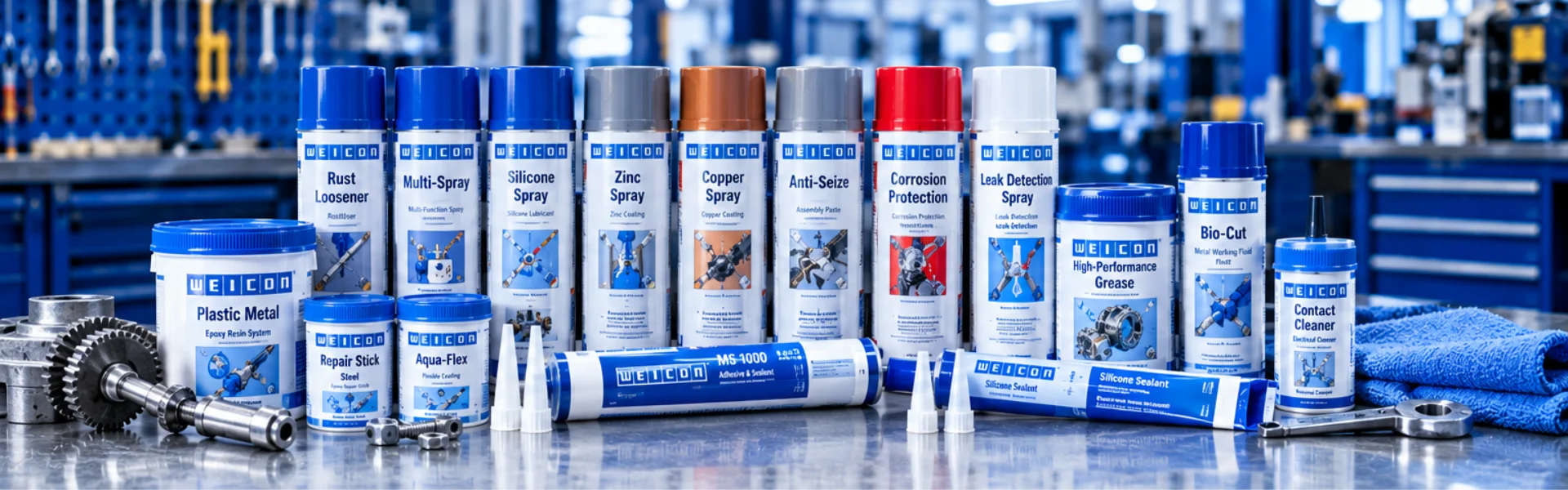
What Are Technical Sprays? A Complete Guide for Industrial Maintenance
Admin
|
07 Oct 2026
|
18 min read
|
21 views
What Are Technical Sprays? A Complete Guide for Industrial Maintenance
Industrial machinery doesn't operate in perfect conditions.
Machines are exposed to:
- Friction
- Moisture
- Dust
- Dirt
- Corrosion
- Heat
- Chemicals
- Vibration
- Wear
- Contamination
Over time, these conditions can affect components, connections, surfaces and moving parts.
This is why maintenance, cleaning, lubrication and protection are essential parts of industrial operations.
One of the simplest and most versatile tools used by maintenance professionals is the technical spray.
But what exactly is a technical spray?
Technical sprays are specialised aerosol-based products developed for specific technical, maintenance, cleaning, lubrication, protection, repair or surface-treatment applications.
Unlike a conventional household spray, an industrial technical spray is formulated for a particular technical purpose.
Depending on the product, a technical spray may be designed to:
- Lubricate moving components
- Remove dirt and contaminants
- Dissolve rust
- Loosen seized components
- Protect metal surfaces against corrosion
- Displace moisture
- Clean electrical contacts
- Reduce friction
- Provide dry lubrication
- Protect surfaces
- Assist assembly
- Prepare surfaces for bonding
- Remove residues
- Provide temporary preservation
- Support industrial repair and maintenance
WEICON describes its technical sprays as solutions for cleaning, care, lubrication, protection and maintenance, with applications across industry, workshops and maintenance environments.
For Australian manufacturers, engineers, maintenance teams, workshops and industrial businesses, understanding the different types of technical sprays can make product selection easier and help improve maintenance workflows.
What Is a Technical Spray?
A technical spray is a specialised spray product designed for a particular technical or industrial application.
It normally consists of:
- An active formulation
- Propellant
- Solvents or carriers where required
- Additives
- Lubricating or protective ingredients depending on the product
The formulation determines what the spray is designed to do.
For example:
A lubricant spray is designed to reduce friction.
A cleaner spray is designed to remove contaminants.
A corrosion protection spray is designed to protect surfaces.
A rust remover is designed to help loosen or remove rust.
A contact cleaner is designed for suitable electrical contact-cleaning applications.
Therefore, "technical spray" is not one individual product.
It is a broad product category containing many specialised solutions.
Why Are Technical Sprays Important in Industrial Maintenance?
Industrial equipment consists of thousands of components and surfaces.
Some require:
- Lubrication
- Cleaning
- Protection
- Preservation
- Corrosion control
- Surface preparation
- Moisture displacement
- Rust removal
Using a dedicated technical spray can make these maintenance tasks faster and more convenient.
WEICON's maintenance portfolio specifically includes adhesives and sprays designed to assist maintenance, repair and servicing of machines and systems.
Regular maintenance can help businesses keep machinery operating reliably and support smoother production processes.
Technical Sprays vs General-Purpose Sprays
One of the biggest misconceptions is that every spray can be used for every maintenance task.
That's not correct.
A multifunctional spray may be suitable for several purposes, but specialised products exist because different applications require different properties.
For example:
Cleaning
You need a cleaner.
Lubrication
You need a lubricant.
Corrosion protection
You need a suitable protective coating or corrosion inhibitor.
Rust removal
You need a rust-removing product.
Electrical contacts
You need a contact-cleaning product designed for the application.
High-temperature lubrication
You need a lubricant formulated for the required temperature range.
This is why technical spray selection should begin with:
What problem am I trying to solve?
Main Types of Technical Sprays
Technical sprays can be broadly grouped into several categories.
WEICON's technical spray portfolio includes product groups such as:
- Adhesive lubricants
- Adhesive sprays
- Assembly sprays
- Cleaners and degreasers
- Grease sprays
- Lubricants and multifunctional oils
- Protection and care products
- Release agents
- Rust removers
- Solvents and release agents
- Special sprays
- Surface and anti-corrosion coatings
- Surface pre-treatment products
Let's look at the major categories.
1. Lubricant Sprays
Lubrication is one of the most common industrial maintenance applications.
Lubricant sprays can help reduce friction between suitable moving surfaces.
Applications may include:
- Hinges
- Bearings
- Chains
- Gears
- Sliding components
- Mechanical joints
- Moving assemblies
The correct lubricant depends on:
- Load
- Speed
- Temperature
- Material
- Movement
- Environment
Why Lubrication Matters
Friction between moving surfaces can contribute to:
- Wear
- Heat generation
- Noise
- Energy losses
- Component damage
Proper lubrication can help reduce friction and wear when the lubricant is correctly selected and applied.
2. Multifunctional Sprays
Multifunctional sprays are designed to perform several maintenance functions.
A good example is WEICON W 44 T Multi-Spray.
WEICON describes W 44 T as combining:
- Corrosion protection
- Water repellency
- Lubrication
- Preservation
- Cleaning
It can also help loosen seized screws, bolts, fittings and valves, penetrate rust, repel moisture from electrical contacts and assist certain cutting operations.
This makes multifunctional sprays useful as general maintenance products.
However, a multifunctional spray should not automatically replace a specialised product when a particular application requires specific technical characteristics.
3. PTFE Sprays
PTFE sprays use polytetrafluoroethylene as a lubricating component.
They are commonly used where a:
- Dry lubricant
- Low-friction surface
- Clean lubrication layer
is required.
WEICON's PTFE Spray is listed as a grease-free dry lubricant.
Potential applications include suitable:
- Sliding surfaces
- Mechanical components
- Guides
- Plastic components
- Rubber components
- Machinery
Always check compatibility with the substrate.
4. Silicone Sprays
Silicone sprays can provide lubrication and release characteristics for suitable applications.
WEICON Silicone Spray is described as a lubricant and release agent.
Potential applications can include:
- Plastic components
- Rubber components
- Sliding surfaces
- Guides
- Mould-release applications
- Maintenance applications
Silicone products should not be used where silicone contamination could interfere with subsequent processes unless the application specifically allows it.
5. Grease Sprays
Grease sprays provide a way of applying lubricating grease through an aerosol format.
They can be useful for components where longer-lasting lubrication is desired compared with some thin oil sprays.
Applications can include:
- Bearings
- Hinges
- Mechanical joints
- Chains
- Sliding surfaces
- Moving components
The correct grease depends on the load, speed and temperature of the application.
6. Rust Remover Sprays
Rust can cause components to become seized or difficult to disassemble.
Rust-removing sprays can help loosen corrosion-affected components.
Potential applications include:
- Rusted bolts
- Screws
- Nuts
- Fittings
- Hinges
- Mechanical joints
- Valves
WEICON's multifunctional spray range includes products specifically described for loosening rusted or seized components.
7. Corrosion Protection Sprays
Corrosion protection sprays are designed to create a protective layer over suitable surfaces.
They can be used for:
- Machinery
- Tools
- Components
- Metal surfaces
- Stored equipment
- Outdoor equipment
WEICON's technical spray range includes dedicated surface and anti-corrosion coating products.
Zinc-Based Corrosion Protection
Zinc sprays are commonly used to provide corrosion protection to metal surfaces.
WEICON Zinc-Alu Spray, for example, is described as providing permanent protection against rust and corrosion for metal surfaces. Its technical documentation specifies surface cleaning and application instructions before spraying.
The correct preparation and application method is important for achieving the intended result.
Stainless Steel Spray
Stainless steel sprays can provide a protective and visual surface coating for suitable applications.
WEICON Stainless Steel Spray is described as a corrosion-resistant surface coating based on acrylic resin and stainless-steel pigments. Its technical documentation specifies resistance to chemicals and weather and short-term temperature resistance up to 300°C.
This can be useful for suitable:
- Stainless-steel surfaces
- Equipment
- Machinery
- Repairs
- Fabricated components
8. Contact Cleaner Sprays
Electrical contacts can be affected by:
- Dirt
- Oil
- Moisture
- Oxidation
- Contamination
Contact-cleaning products are designed for appropriate electrical maintenance applications.
They can be used for suitable:
- Connectors
- Electrical contacts
- Switches
- Terminals
- Electrical components
However, electrical systems require particular care.
Always isolate equipment and follow appropriate electrical safety procedures before applying any cleaning product.
9. Cleaner and Degreaser Sprays
Cleaning is often the first step in maintenance.
Industrial cleaners and degreasers can remove:
- Oil
- Grease
- Dirt
- Residues
- Contamination
This can be especially important before:
- Bonding
- Sealing
- Painting
- Coating
- Lubrication
- Repair
WEICON's technical spray category includes dedicated cleaners and degreasers as well as surface-preparation products.
Why Surface Cleaning Matters
A contaminated surface can interfere with:
- Adhesion
- Coating
- Lubrication
- Sealing
- Repair
For example, if an adhesive is applied to an oily surface, the adhesive may not achieve the expected performance.
That is why surface preparation should be considered part of the maintenance process.
10. Release Agent Sprays
Release agents are used to help prevent suitable materials from sticking to surfaces.
They can be useful in:
- Manufacturing
- Mould-making
- Plastics
- Rubber processing
- Production environments
WEICON lists release agents as one of its technical spray product groups.
11. Adhesive Sprays
Adhesive sprays are aerosol-based products designed for suitable bonding applications.
They can be useful where:
- Large surface areas need adhesive application
- Fast application is important
- A sprayable adhesive format is convenient
The exact application depends on the adhesive technology.
12. Assembly Sprays
Assembly sprays can assist certain assembly and maintenance processes.
They may be designed to:
- Reduce friction
- Facilitate assembly
- Protect surfaces
- Prevent seizure
The exact function depends on the product.
13. Specialised Technical Sprays
Some applications require highly specialised products.
Examples can include:
- Cutting sprays
- Leak detection sprays
- Anti-friction sprays
- Food-sector lubricants
- Special cleaning products
- Surface treatment sprays
- Electrical maintenance sprays
This is why industrial technical spray portfolios can contain many different formulations.
Technical Sprays for Industrial Cleaning
Cleaning is one of the most important maintenance activities.
Technical cleaners can help remove contaminants from:
- Machinery
- Components
- Tools
- Work surfaces
- Electrical equipment
- Mechanical assemblies
The correct cleaner depends on the contaminant and substrate.
Technical Sprays for Lubrication
Lubrication can be required wherever two surfaces move relative to one another.
Examples include:
- Bearings
- Gears
- Chains
- Hinges
- Shafts
- Guides
- Sliding surfaces
The right lubricant depends on the operating conditions.
Technical Sprays for Corrosion Protection
Corrosion can affect:
- Structural components
- Machinery
- Tools
- Fasteners
- Fabricated parts
- Outdoor equipment
Corrosion protection sprays can provide an additional protective layer.
Some products are designed for temporary preservation, while others are designed as surface coatings.
Always determine the intended function before choosing a product.
Technical Sprays for Rust Removal
Rust can cause:
- Seized components
- Difficult disassembly
- Increased friction
- Surface deterioration
A suitable rust remover or multifunctional spray can assist with loosening corroded components.
However, severe corrosion may require additional mechanical or chemical treatment.
Technical Sprays for Seized Bolts
A seized bolt can significantly increase maintenance time.
A suitable penetrating or multifunctional spray can help the product reach the threaded interface and assist loosening.
A typical maintenance process may be:
Clean → Apply → Allow penetration → Attempt loosening → Reapply if necessary
Do not force a severely seized component without considering the possibility of component damage.
Technical Sprays for Electrical Maintenance
Electrical maintenance sprays can help with appropriate cleaning and moisture-related issues.
Some multifunctional products are designed to repel moisture from electrical contacts.
WEICON W 44 T, for example, is described as repelling humidity from electrical contacts and helping prevent leakage currents.
However, the product must be suitable for the particular electrical application.
Technical Sprays for Pneumatic Equipment
Pneumatic equipment contains moving components and compressed-air connections.
Maintenance may require:
- Lubrication
- Cleaning
- Corrosion protection
- Component care
WEICON's technical spray range includes application areas for hydraulic and pneumatic systems.
Technical Sprays for Hydraulic Equipment
Hydraulic systems operate under pressure and can contain specialised fluids.
Maintenance sprays may be used for suitable:
- External component maintenance
- Lubrication
- Cleaning
- Corrosion protection
The spray must be compatible with the application and should not contaminate hydraulic fluid or sensitive components.
Technical Sprays for Manufacturing
Manufacturing facilities use technical sprays throughout production and maintenance.
Potential applications include:
- Machine lubrication
- Cleaning
- Corrosion protection
- Tool maintenance
- Component assembly
- Surface preparation
- Rust removal
WEICON lists manufacturing-related environments such as mechanical engineering, mould-making, mining, automotive and other industrial sectors among its technical spray application areas.
Technical Sprays for Workshops
Workshops often need versatile maintenance products.
A workshop may use technical sprays for:
- Loosening bolts
- Cleaning parts
- Lubricating hinges
- Protecting tools
- Removing rust
- Maintaining machinery
A carefully selected maintenance spray kit can cover many routine jobs.
Technical Sprays for Mining
Mining equipment operates in demanding environments.
Potential problems include:
- Dust
- Moisture
- Corrosion
- Heavy loads
- Vibration
- Mechanical wear
Technical sprays can support maintenance activities such as cleaning, lubrication and corrosion protection.
WEICON identifies mining among the application areas of its technical spray portfolio.
Technical Sprays for Automotive Applications
Automotive and transport equipment contains numerous moving and metal components.
Technical sprays can be used for suitable:
- Hinges
- Mechanical components
- Electrical contacts
- Fasteners
- Lubrication points
- Rusted components
WEICON lists automotive and transport among the application areas for technical sprays.
Technical Sprays for Marine Applications
Marine environments can expose components to:
- Salt
- Water
- Moisture
- Corrosion
Suitable technical sprays can assist with:
- Lubrication
- Corrosion protection
- Cleaning
- Maintenance
WEICON lists maritime industry among the application areas for its technical sprays.
Technical Sprays for Oil and Gas
Oil and gas equipment can involve demanding operating conditions.
Maintenance teams may require products for:
- Lubrication
- Corrosion protection
- Cleaning
- Rust removal
- Surface treatment
WEICON lists oil and gas among the application areas for its technical spray portfolio.
Technical Sprays for Food and Pharmaceutical Environments
Food, pharmaceutical and cosmetic manufacturing can have additional requirements.
Products may need specific certifications or approvals.
WEICON's technical spray portfolio includes food-sector products, including products identified with NSF classifications.
For example, WEICON Bio-Fluid is listed as a lubricating and care oil for the food sector with NSF H1 classification.
Always verify the exact approval for the intended application.
Technical Spray Selection: How to Choose the Right Product
Choosing the right technical spray starts with identifying the problem.
Ask:
1. What am I trying to achieve?
Is the requirement:
- Clean?
- Lubricate?
- Protect?
- Loosen?
- Coat?
- Preserve?
- Remove rust?
- Reduce friction?
- Prepare a surface?
2. What material am I treating?
Determine whether the surface is:
- Steel
- Stainless steel
- Aluminium
- Copper
- Brass
- Plastic
- Rubber
- Painted
- Coated
3. What conditions will it experience?
Consider:
- Temperature
- Pressure
- Moisture
- Chemicals
- UV exposure
- Dust
- Vibration
4. Does the product need to remain?
Some products provide temporary lubrication or protection.
Others create a longer-lasting coating.
5. Is cleanliness important?
If the application requires a clean, dry surface, a dry lubricant or dedicated cleaner may be preferable to an oil-based product.
Technical Spray Selection Matrix
| Maintenance Requirement | Product Type to Consider |
| General lubrication | Lubricant spray |
| Multiple maintenance functions | Multifunctional spray |
| Dry lubrication | PTFE / MoS₂ spray |
| Silicone lubrication | Silicone spray |
| Rust removal | Rust remover / penetrating spray |
| Corrosion protection | Anti-corrosion spray |
| Metal coating | Zinc / stainless steel coating |
| Degreasing | Cleaner / degreaser |
| Electrical contact cleaning | Contact cleaner |
| Release | Release agent |
| Cutting and drilling | Cutting fluid spray |
| Food-sector lubrication | Approved food-grade product |
| Surface preparation | Surface cleaner / pre-treatment spray |
This is a general selection guide. Always check the individual product's technical documentation.
Technical Sprays and Surface Preparation
Surface preparation is often overlooked.
Before applying a coating, lubricant or adhesive, determine whether the surface needs to be:
- Clean
- Dry
- Degreased
- Free of rust
- Free of loose particles
For example, WEICON's Zinc-Alu Spray technical documentation instructs users to clean and degrease the surface before application.
Similarly, the Stainless Steel Spray technical documentation specifies cleaning and degreasing before application.
How to Apply a Technical Spray
Always follow the product-specific instructions.
A general process is:
Step 1 — Inspect
Identify the surface and maintenance problem.
Step 2 — Clean
Remove loose dirt and contaminants.
Step 3 — Prepare
Degrease or prepare the surface if required.
Step 4 — Shake
For aerosol products requiring mixing, shake according to the instructions.
Step 5 — Spray
Apply at the recommended distance.
Step 6 — Allow to Work
Allow sufficient time for penetration, evaporation or curing where required.
Step 7 — Reapply if Required
Some applications may require multiple coats.
Why Spray Distance Matters
Spraying too close can cause:
- Excessive product
- Uneven coverage
- Runs
- Waste
Spraying too far can result in:
- Poor coverage
- Overspray
- Uneven application
The correct spray distance depends on the product.
For example, WEICON's Zinc-Alu Spray technical data specifies approximately 25 cm distance during application.
Why Multiple Coats May Be Required
Some protective coatings achieve their intended performance through multiple layers.
For example, WEICON Corro-Protection's technical documentation states that several layers can be applied to increase corrosion protection.
The number of coats and drying intervals should always follow the product instructions.
Technical Spray Safety
Technical sprays are chemical products stored under pressure.
Important precautions include:
- Read the label
- Read the Safety Data Sheet
- Use suitable ventilation
- Avoid ignition sources where applicable
- Wear appropriate PPE
- Avoid inhaling spray mist
- Don't puncture or burn aerosol containers
- Store correctly
- Keep away from excessive heat
WEICON technical documentation specifies that pressurised containers should be protected from direct sunlight and temperatures above +50°C.
Always follow the specific safety requirements for the product being used.
Technical Sprays and Storage
Correct storage is important.
Avoid:
- Direct sunlight
- Excessive heat
- Damaged cans
- Uncontrolled storage
Aerosol containers should be stored according to the manufacturer's instructions.
Technical Sprays and Preventive Maintenance
Technical sprays can form part of a preventive-maintenance program.
Instead of waiting for:
Component failure → Emergency repair
maintenance teams can implement:
Inspection → Cleaning → Lubrication → Protection → Monitoring
This proactive approach can help identify problems before they become major maintenance events.
Technical Sprays and Equipment Reliability
Reliable machinery depends on many factors.
These include:
- Correct assembly
- Proper lubrication
- Clean components
- Corrosion control
- Regular inspection
- Appropriate maintenance
Technical sprays can support several of these activities.
They are not a replacement for proper engineering or preventive maintenance, but they can be valuable maintenance tools.
Common Technical Spray Mistakes
Mistake 1 — Using One Spray for Everything
A multifunctional spray is useful, but it isn't automatically the best solution for every application.
Mistake 2 — Ignoring Material Compatibility
Some products can affect:
- Plastics
- Rubber
- Paint
- Coatings
Always verify compatibility.
Mistake 3 — Applying to Dirty Surfaces
Contamination can affect performance.
Mistake 4 — Using Too Much Product
Excessive product can create:
- Waste
- Mess
- Overspray
- Contamination
Mistake 5 — Ignoring Temperature
Lubricants and coatings have operating temperature ranges.
Mistake 6 — Ignoring Chemical Exposure
A lubricant suitable for one environment may not be suitable for another.
Mistake 7 — Ignoring Approvals
Specialised environments may require specific approvals.
Mistake 8 — Not Reading the Technical Data Sheet
The product label provides important information, but technical documentation provides additional application details.
WEICON Technical Sprays
WEICON has a broad technical spray portfolio designed for industrial maintenance and related applications.
Its technical spray range includes categories covering:
- Lubrication
- Cleaning
- Degreasing
- Corrosion protection
- Surface treatment
- Rust removal
- Protection
- Release applications
- Special applications
WEICON lists applications across maintenance, mechanical engineering, automotive, mining, maritime, energy, oil and gas, hydraulic and pneumatic systems and other industrial sectors.
WEICON W 44 T Multi-Spray
WEICON W 44 T is a multifunctional spray designed to combine several maintenance functions.
According to WEICON, it provides:
- Corrosion protection
- Water repellency
- Lubrication
- Preservation
- Cleaning
It can also help loosen seized components and penetrate rust.
This makes it a useful example of how one technical spray can support multiple maintenance tasks.
WEICON AT-44 Allround Spray
AT-44 is a silicone-free multifunctional spray containing PTFE.
WEICON describes it as combining:
- Corrosion protection
- Cleaning
- Water displacement
- Lubrication
- Preservation
It can also help loosen seized threads, bolts, fittings and valves.
WEICON Anti-Friction Spray MoS₂
MoS₂-based technical sprays are designed for dry lubrication applications.
WEICON Anti-Friction Spray MoS₂ is described as a grease-free dry lubricant with a stated pressure and temperature resistance from -200°C to +450°C, with brief exposure up to 500°C according to its technical documentation.
This illustrates why technical spray selection should consider the operating temperature and application rather than simply choosing a general-purpose lubricant.
WEICON Fitting Spray
Fitting Spray is designed for maintenance and care of suitable fittings.
WEICON describes it as:
- Silicone-free
- Resin-free
- Acid-free
- Solvent-free
and notes its capillary action, water-repelling properties and ability to reduce friction and wear.
Technical Sprays for Australian Industry
Australian industrial environments can involve demanding conditions.
Depending on the location and industry, equipment may experience:
- High temperatures
- Dust
- Moisture
- Corrosion
- Heavy mechanical loads
- Outdoor exposure
- Coastal environments
- Industrial chemicals
This makes appropriate maintenance particularly important.
Technical sprays can support maintenance teams in areas such as:
Manufacturing
Mining
Automotive
Agriculture
Energy
Oil & Gas
Marine
Mechanical Engineering
Hydraulic & Pneumatic Systems
WEICON identifies all of these among the application areas represented in its technical spray portfolio.
How Spleca Can Help
Selecting an industrial spray isn't simply about choosing the most popular product.
The right solution depends on:
Application
Material
Temperature
Environment
Chemical exposure
Required performance
Duration
Approvals
Spleca can help Australian industrial customers identify suitable WEICON products for their specific maintenance requirements.
Instead of asking:
"Which spray should I buy?"
start with:
"What maintenance problem am I trying to solve?"
That question usually makes product selection much easier.
Technical Spray Selection Checklist
Before purchasing a technical spray, record:
Application:
Problem:
Component:
Surface material:
Operating temperature:
Maximum temperature:
Moisture exposure:
Chemical exposure:
Movement:
Pressure:
Indoor / outdoor:
Required lubrication:
Required protection:
Required cleaning:
Required approval:
Existing product:
Photos:
Providing these details can make technical product recommendations more accurate.
Frequently Asked Questions
What are technical sprays?
Technical sprays are specialised aerosol products designed for industrial and technical applications such as cleaning, lubrication, corrosion protection, rust removal, surface treatment and maintenance.
What are technical sprays used for?
They can be used for cleaning, lubrication, corrosion protection, rust removal, moisture displacement, surface treatment, maintenance and other technical applications.
Are technical sprays only used in factories?
No. They are used in factories, workshops, maintenance departments, automotive environments, engineering operations and many other industrial settings.
What is an industrial technical spray?
An industrial technical spray is a specialised spray formulated for a specific maintenance or technical requirement.
What is a multifunctional spray?
A multifunctional spray is designed to perform several maintenance functions in one product. WEICON W 44 T, for example, combines lubrication, cleaning, corrosion protection, water repellency and preservation.
What is PTFE spray?
PTFE spray is a lubricant containing PTFE that can provide a dry, low-friction lubricating layer for suitable applications. WEICON PTFE Spray is described as a grease-free dry lubricant.
What is silicone spray?
Silicone spray is a silicone-based technical spray commonly used for lubrication and release applications. WEICON Silicone Spray is described as a lubricant and release agent.
What is a technical spray used for rust?
Rust-removing and multifunctional sprays can help loosen rusted or seized components. The correct product depends on the corrosion condition and component material.
Can technical sprays prevent corrosion?
Yes. Certain technical sprays are specifically formulated for corrosion protection and surface coating.
Can technical sprays be used on electrical equipment?
Some products are designed for suitable electrical maintenance applications, particularly contact cleaning or moisture displacement. Always verify the product's intended use and follow electrical safety procedures.
Can technical sprays be used on plastic?
Some can, but compatibility varies by formulation and plastic type. Always check the technical documentation before applying a product to plastic.
Can technical sprays be used on rubber?
Some products are suitable for certain rubber materials, while others may affect them. Always verify compatibility.
What is the difference between lubricant spray and multifunctional spray?
A lubricant spray is primarily designed for lubrication, while a multifunctional spray is designed to perform several maintenance functions.
What is the difference between technical spray and contact cleaner?
A technical spray is a broad category covering many products. Contact cleaner is a specialised product intended for suitable electrical contact-cleaning applications.
Are technical sprays safe?
Technical sprays are chemical products and should be handled according to the label, Safety Data Sheet and manufacturer's instructions.
How should aerosol technical sprays be stored?
Store them according to the manufacturer's instructions and protect pressurised containers from direct sunlight and excessive temperatures. WEICON documentation specifies protection from temperatures above +50°C for relevant aerosol products.
How do I choose the right technical spray?
Identify the maintenance problem first, then consider the surface material, temperature, environment, chemical exposure, required performance and any necessary approvals.
Conclusion
Technical sprays are an important part of modern industrial maintenance.
They provide convenient solutions for:
Cleaning
Lubrication
Rust removal
Corrosion protection
Moisture displacement
Surface preparation
Component care
Maintenance
Repair
But technical spray is a broad category.
There is no single spray that is ideal for every application.
A maintenance team may need:
- A multifunctional spray for general maintenance
- A PTFE spray for dry lubrication
- A silicone spray for suitable lubrication and release applications
- A rust remover for seized components
- A corrosion protection spray for metal surfaces
- A cleaner for surface preparation
- A contact cleaner for suitable electrical applications
- A specialised high-temperature lubricant for demanding machinery
The correct selection comes down to understanding the application.
Identify the problem → Identify the material → Identify the environment → Check the technical requirements → Select the appropriate product.
WEICON's technical spray portfolio covers a wide range of industrial maintenance requirements, from cleaning and lubrication to corrosion protection, surface treatment and specialised maintenance applications.
For Australian manufacturers, workshops, engineers, maintenance professionals and industrial businesses, Spleca can help you identify suitable WEICON technical spray solutions for your application.
Looking for the right technical spray?
Explore Industrial Automation Products