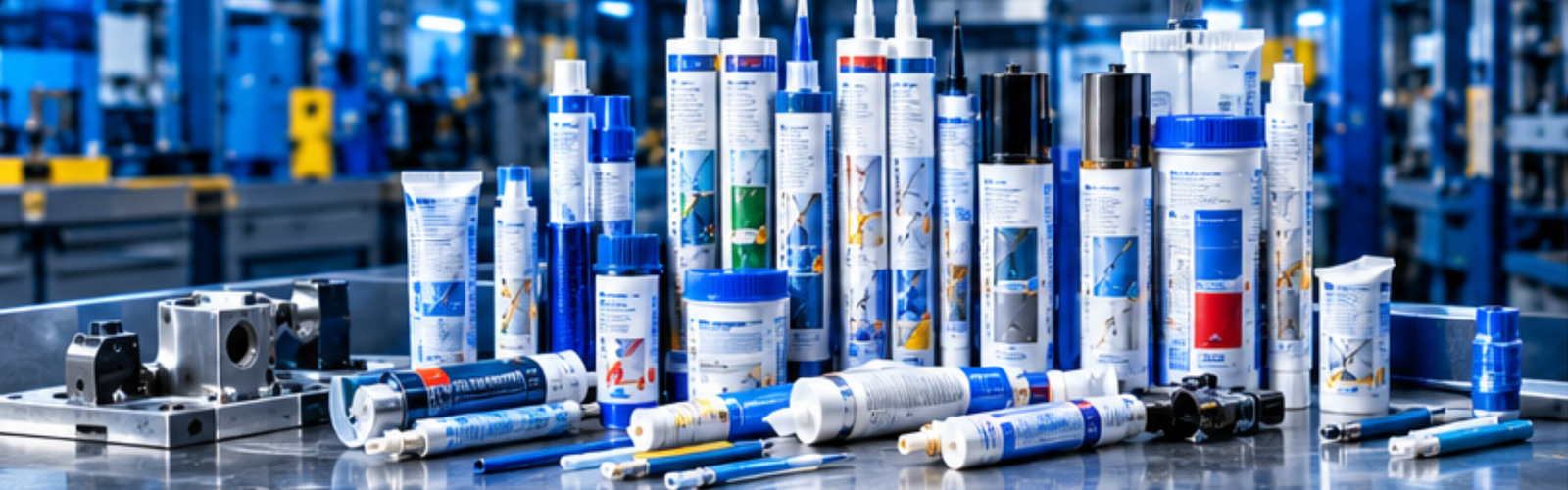
How to Choose the Right Industrial Adhesive
Admin
|
15 Sep 2026
|
22 min read
|
22 views
How to Choose the Right Industrial Adhesive
Choosing an industrial adhesive is not simply a matter of finding the strongest glue available.
The right adhesive depends on the materials being joined, joint design, operating temperature, environmental conditions, required strength, curing time, gap size, flexibility, chemical exposure and application process.
A product that works extremely well for one industrial application may be completely unsuitable for another.
For example, the adhesive required to bond two aluminium components may be very different from the product required to bond rubber, secure a threaded connection, seal a pipe fitting or repair a damaged metal component.
This is why professional adhesive selection should always begin with the application.
WEICON provides an Adhesive Finder specifically to help users select suitable products based on bonding conditions such as bonding type, bonding gap and ambient temperature.
This guide explains exactly what Australian manufacturers, OEMs, engineers, maintenance teams, fabricators and industrial businesses should consider when choosing an industrial adhesive.
What Is Industrial Adhesive Selection?
Industrial adhesive selection is the process of matching an adhesive technology and product to the requirements of a specific bonding, sealing, assembly or repair application.
The selection process should answer several questions:
1. What materials are being joined?
2. What type of joint is being created?
3. What loads will the joint experience?
4. What temperature will the adhesive experience?
5. Will the adhesive be exposed to chemicals?
6. How large is the bonding gap?
7. How quickly must the adhesive cure?
8. Does the joint need to remain flexible?
9. Does the joint need to be removable?
10. How will the adhesive be applied?
These factors are much more important than simply searching for the "strongest industrial adhesive."
The 10 Most Important Factors When Choosing an Industrial Adhesive
The following ten factors should form the foundation of your adhesive selection process:
- Materials
- Joint design
- Load
- Temperature
- Chemical exposure
- Bonding gap
- Cure time
- Flexibility
- Surface preparation
- Application method
Let's examine each one.
1. Identify the Materials Being Bonded
The first question should always be:
What materials am I joining?
This is fundamental because different materials have different surface properties.
You may be bonding:
- Steel
- Stainless steel
- Aluminium
- Cast iron
- Copper
- Plastics
- Rubber
- Glass
- Ceramics
- Wood
- Composite materials
- Fibre-reinforced plastics
Or you may be joining two completely different materials.
For example:
Aluminium + Aluminium
is different from:
Aluminium + Plastic
which is different again from:
Plastic + Rubber
The adhesive needs to be compatible with the actual substrates.
WEICON provides product-selection guidance for different plastics, for example, showing that different plastic types can call for different adhesive technologies and products.
Why Material Compatibility Matters
An adhesive does not bond equally well to every material.
Some plastics can be difficult to bond.
Some metals may require specific surface preparation.
Some rubber compounds may require specialised adhesives.
Some composite materials may require particular formulations.
Therefore, never select an adhesive solely because it says:
"High Strength"
Instead, check whether the adhesive is actually suitable for your substrates.
Metal Bonding
Metal is one of the most common industrial bonding substrates.
Potential materials include:
- Mild steel
- Stainless steel
- Aluminium
- Cast iron
- Brass
- Copper
Epoxy adhesives and structural adhesives can be suitable for many metal-bonding applications.
WEICON describes its epoxy adhesives as high-performance two-component adhesives intended for durable, high-strength bonds in industrial production, maintenance and technical repairs.
Plastic Bonding
Plastic bonding requires additional consideration.
Different plastics can behave very differently.
Examples include:
- ABS
- PVC
- POM
- PBT
- PMMA
- PC
- SAN
- PUR
- GRP
- CFRP
WEICON's plastic-bonding guidance demonstrates that adhesive selection can vary according to the specific plastic type.
Therefore:
Identify the plastic before choosing the adhesive.
If you do not know the plastic type, determine it before making a critical adhesive selection.
Rubber Bonding
Rubber can require specialised adhesive systems because of its flexibility and surface characteristics.
Important considerations include:
- Rubber type
- Flexibility
- Surface condition
- Temperature
- Chemical exposure
- Required bond strength
Certain cyanoacrylate adhesives are designed for rubber and plastics, while other applications may require different adhesive technologies.
Glass and Ceramics
Glass and ceramics have different surface characteristics from metals and plastics.
When selecting an adhesive, consider:
- Transparency requirements
- Thermal expansion
- Surface condition
- Required flexibility
- Temperature
- Moisture exposure
The adhesive should be specifically verified for the intended substrate combination.
Composite Materials
Composite materials such as:
- GRP
- CFRP
- Fibre-reinforced plastics
are increasingly used in industrial applications.
WEICON identifies fibre-reinforced composites among the materials suitable for selected structural adhesive systems.
For composite bonding, adhesive selection should consider both the resin system and reinforcement structure.
2. Understand the Joint Design
The second major consideration is:
What does the joint look like?
A large-area bonded joint is different from a small point connection.
Consider:
- Bonding area
- Joint geometry
- Joint thickness
- Overlap
- Gap
- Edge exposure
- Access for application
A good adhesive cannot compensate for fundamentally unsuitable joint design.
Bonding Area
A larger bonding area can provide more surface over which the adhesive can distribute loads.
For example:
Small-area bond
A small component attached to a larger surface.
Large-area bond
Two panels joined across a broad surface.
Different adhesive technologies may be suitable for these applications.
WEICON identifies epoxy adhesive applications including large-area bonding and heavily stressed metal parts.
Overlap Joints
In many adhesive applications, overlap joints can be used to create a larger bonding area.
The actual joint geometry should be designed according to engineering requirements.
Do not assume that increasing adhesive thickness or simply increasing the amount of adhesive automatically increases joint strength.
Bonding Gap
Bonding gap is one of the most important selection criteria.
The gap is the distance between the surfaces being joined.
You may have:
- Very tight-fitting surfaces
- Small gaps
- Moderate gaps
- Large gaps
Different adhesives have different gap-filling capabilities.
WEICON specifically includes bonding gap as one of the conditions used in its Adhesive Finder.
3. Determine the Required Strength
The next question is:
How much mechanical stress will the joint experience?
Consider whether the joint will experience:
- Tensile loads
- Shear loads
- Compression
- Peel
- Impact
- Vibration
- Cyclic loading
The adhesive should be selected according to the actual load profile.
Tensile Loads
Tensile forces attempt to pull bonded surfaces apart.
A structural adhesive may be appropriate where the joint is designed for suitable tensile loading.
Shear Loads
Shear forces attempt to slide one surface across another.
Joint geometry can significantly influence adhesive performance under shear.
Peel Loads
Peel forces concentrate stress at an edge.
Adhesive joints generally need to be designed carefully where peel forces are significant.
Impact Loads
Some applications experience sudden forces.
For example:
- Machinery
- Automotive equipment
- Industrial components
- Transport equipment
Certain adhesive technologies are formulated with impact resistance in mind.
Vibration
Industrial machinery can produce continuous vibration.
This is particularly relevant for:
- Motors
- Pumps
- Gearboxes
- Conveyors
- Automotive systems
- Industrial machinery
A suitable adhesive or threadlocker may help address specific vibration-related joining requirements.
WEICON states that its WEICONLOCK anaerobic products are used for applications including threadlocking, retaining, pipe/thread sealing and flange sealing.
4. Check the Operating Temperature
Temperature is one of the most important factors in adhesive selection.
Determine:
Minimum temperature
What is the lowest temperature the joint will experience?
Normal temperature
What temperature does the equipment normally operate at?
Maximum temperature
What is the highest temperature the joint will experience?
Short-term temperature
Could the joint experience temporary temperature spikes?
Why Temperature Matters
Adhesive performance can change with temperature.
An adhesive suitable for room-temperature applications may not be appropriate for:
- Engines
- Furnaces
- Industrial heaters
- High-temperature machinery
- Welding-adjacent applications
WEICON offers specialised high-temperature epoxy adhesives, including Easy-Mix HT 180 and Easy-Mix HT 250.
WEICON's current product information identifies Easy-Mix HT 250 as a high-temperature-resistant epoxy adhesive up to 250°C.
Short-Term vs Continuous Temperature
Do not look only at the maximum temperature number.
Ask:
Is the joint exposed to this temperature continuously or only briefly?
These are different operating conditions.
Always use the manufacturer's technical data for the actual product.
5. Consider Chemical Exposure
Industrial equipment can be exposed to:
- Oil
- Grease
- Fuel
- Solvents
- Cleaning chemicals
- Acids
- Alkalis
- Water
- Salt
- Process chemicals
If the adhesive is exposed to these substances, chemical resistance becomes an important selection criterion.
Chemical Compatibility
Before selecting an adhesive, determine:
What chemicals will contact the joint?
Then check the manufacturer's technical documentation.
Do not assume that an adhesive described as "chemical resistant" is resistant to every chemical.
The exact chemical, concentration, temperature and exposure duration can matter.
6. Determine the Required Cure Time
Production environments often have strict cycle times.
A manufacturer may need:
Fast bonding
while another application may prioritise:
Maximum working time
These requirements can result in completely different adhesive choices.
Fast-Curing Adhesives
Cyanoacrylate adhesives are commonly used where rapid bonding is required.
WEICON describes its cyanoacrylate adhesives as cold-curing one-component adhesives that can bond various materials within seconds, depending on the product and application.
These can be useful for:
- Small components
- Rapid assembly
- Repairs
- Production processes requiring quick handling
Longer Working Time
Some applications require the technician to position components carefully.
A very fast adhesive may actually be inconvenient if:
- Components are large
- Alignment is difficult
- Multiple components need positioning
- The joint requires adjustment
In such situations, a slower-curing product may be more appropriate.
Cure Time vs Handling Time
These should not be confused.
An adhesive may become strong enough to handle after a certain period while continuing to cure toward its final properties.
Always follow the product's technical data.
7. Determine Whether the Joint Needs Flexibility
Ask:
Should the finished joint be rigid or flexible?
Some applications need a rigid connection.
Others experience:
- Movement
- Vibration
- Thermal expansion
- Mechanical flexing
A flexible adhesive or sealant may be more suitable in those situations.
WEICON's adhesive and sealant portfolio includes flexible technologies such as MS polymers and urethanes alongside more rigid adhesive systems.
Rigid Adhesive Applications
Rigid bonding may be appropriate for:
- Structural components
- Metal assemblies
- Machine parts
- Rigid housings
Flexible Adhesive Applications
Flexible bonding can be relevant to:
- Sealing
- Vibration
- Moving components
- Dissimilar-material assemblies
- Components experiencing thermal movement
8. Consider Surface Preparation
Surface preparation is one of the most important steps in adhesive bonding.
WEICON specifically states that careful surface preparation is the most important factor for successful adhesive use in its plastic-bonding guidance.
A typical preparation process can include:
Clean → Degrease → Dry → Roughen if appropriate → Clean Again → Apply Adhesive
The exact process depends on the material and adhesive.
Remove Contamination
Potential contaminants include:
- Oil
- Grease
- Dust
- Moisture
- Rust
- Paint
- Oxidation
- Existing adhesive
These can interfere with bonding.
Clean and Degrease
The surfaces should be cleaned using a suitable method compatible with the substrate and adhesive.
WEICON's plastic-bonding guidance specifically recommends clean and dry surfaces and cleaning/degreasing with an appropriate surface cleaner.
Roughening the Surface
Some applications benefit from light mechanical surface preparation.
However, do not automatically roughen every surface.
Follow the adhesive manufacturer's instructions for the specific substrate.
9. Determine the Application Method
Industrial adhesives can be supplied in different formats.
For example:
- Tubes
- Bottles
- Cartridges
- Dual cartridges
- Syringes
- Repair sticks
- Bulk containers
The application method can affect production efficiency.
One-Component Adhesives
One-component adhesives are supplied ready for use without manually mixing two components.
WEICON's portfolio includes one-component systems such as:
- Silicones
- MS polymers
- Instant adhesives
- Threadlockers
Two-Component Adhesives
Two-component systems require two components to be combined.
These may offer different performance characteristics and are common in structural and epoxy adhesive applications.
WEICON's epoxy adhesive range consists of two-component systems for durable, high-strength industrial bonding.
Adhesive Dispensing Systems
For production environments, manual application may not always be the most efficient method.
Two-component adhesives can be used with appropriate dispensing systems.
This can help provide:
- Controlled mixing
- Consistent application
- Reduced waste
- Repeatable processes
The exact system should be matched to the adhesive cartridge and application requirements.
10. Consider Whether the Joint Needs to Be Removable
Not every industrial connection needs to be permanent.
Ask:
Will this component need to be removed during future maintenance?
This is particularly important for:
- Bolted assemblies
- Bearings
- Machinery
- Threaded components
- Maintenance equipment
WEICON's threadlocker selection guidance specifically identifies strength and removability as factors in choosing the appropriate product.
Choosing an Adhesive by Application
Instead of choosing an adhesive based purely on chemistry, you can begin with the application.
Metal-to-Metal Bonding
Potential adhesive technologies include:
- Epoxy
- Structural acrylic
- Anaerobic systems for appropriate assemblies
The selection depends on:
- Load
- Temperature
- Gap
- Surface
- Required cure time
WEICON's epoxy systems are designed for applications involving heavily stressed metal parts and large-area bonding.
Metal-to-Plastic Bonding
This can be more complex because the two materials have different surface characteristics and thermal expansion behaviour.
Consider:
- Plastic type
- Metal type
- Temperature
- Flexibility
- Chemical exposure
WEICON provides substrate-specific guidance for plastic bonding.
Plastic-to-Plastic Bonding
Identify the exact plastic first.
For example:
ABS ≠ POM ≠ PMMA ≠ PC ≠ PVC
Different plastics can require different adhesive technologies.
Rubber-to-Metal Bonding
Consider:
- Rubber formulation
- Flexibility
- Temperature
- Oil exposure
- Movement
A suitable cyanoacrylate or other specialised adhesive may be appropriate depending on the application.
Glass-to-Metal Bonding
Important considerations include:
- Transparency
- Thermal expansion
- Moisture
- Joint flexibility
- Surface preparation
Composite Bonding
For:
- GRP
- CFRP
- Fibre-reinforced plastics
consider:
- Resin system
- Fibre type
- Surface condition
- Load
- Temperature
WEICON identifies suitable structural adhesive products for fibre-reinforced composites.
Choosing an Adhesive by Temperature
A useful initial classification is:
Standard temperature
Consider general-purpose adhesive technologies.
Elevated temperature
Consider specialised high-temperature adhesives.
Extreme or cyclic temperature
Review detailed technical data including continuous and short-term temperature limits.
For example, WEICON offers epoxy systems specifically designed for elevated-temperature applications, including HT 180 and HT 250 products.
Choosing an Adhesive by Speed
Need very fast bonding?
Consider:
Cyanoacrylate
Need controlled working time?
Consider:
Two-component epoxy or structural adhesive
Need a permanent threaded connection?
Consider:
Anaerobic threadlocker
Need sealing and flexibility?
Consider:
Silicone / MS polymer / suitable sealant
The exact product still needs to be verified against the application.
Choosing an Adhesive by Gap
Gap size can dramatically affect adhesive selection.
Very small gap
Many adhesives can work effectively when surfaces fit closely.
Moderate gap
Choose a product specifically capable of handling the required gap.
Large gap
Consider a gap-filling system designed for that application.
WEICON's Product Finder specifically includes bonding gap among its selection criteria.
Choosing an Adhesive by Strength
Do not simply search for:
"Maximum strength."
Instead ask:
- What load?
- What direction?
- What joint geometry?
- What temperature?
- What material?
- What environment?
A high-strength adhesive may not be the best choice if the joint needs flexibility.
Choosing an Adhesive for Threaded Connections
Threaded connections are different from surface-to-surface bonding.
For example:
Bolt + Nut
Stud + Thread
Pipe Thread
Bearing + Shaft
These may require anaerobic adhesive technologies rather than conventional structural adhesives.
WEICONLOCK covers four key application categories:
- Threadlocking
- Pipe/thread sealing
- Retaining cylindrical assemblies
- Flange sealing/gasketing
Choosing a Threadlocker
When choosing a threadlocker, consider:
Thread size
For example:
- Small threads
- Medium threads
- Large threads
Required strength
- Low
- Medium
- High
Temperature
Determine operating temperature.
Removability
Does maintenance require future disassembly?
Gap
Larger thread gaps can affect product selection.
WEICON recommends considering application, thread size or gap, strength and desired removability when selecting a threadlocker.
Choosing a Retaining Compound
Retaining compounds are used for suitable cylindrical assemblies.
Applications may include:
- Bearings
- Shafts
- Bushes
- Gear components
- Hubs
Consider:
- Diameter
- Gap
- Material
- Required strength
- Temperature
- Future disassembly
WEICONLOCK includes retaining compounds specifically for cylindrical assemblies.
Choosing an Adhesive for Repairs
Repair applications often have different requirements from new-product manufacturing.
You may need:
- Gap filling
- Surface rebuilding
- Wear resistance
- Corrosion resistance
- Fast repair
- High temperature resistance
WEICON's Epoxy Solutions range includes repair products designed for repairing, shaping and rebuilding metal, as well as wear and corrosion protection.
Choosing an Adhesive for High-Temperature Applications
If temperature is high, don't simply choose an adhesive marketed as "industrial."
Look specifically for:
- Maximum continuous temperature
- Short-term temperature resistance
- Cure requirements
- Mechanical performance at temperature
- Chemical resistance at temperature
For example, WEICON Easy-Mix HT 250 is specified as a high-temperature-resistant epoxy adhesive up to 250°C.
Choosing an Adhesive for Manufacturing
Manufacturing environments introduce additional considerations.
Ask:
- How many components are being bonded?
- How many units per day?
- How quickly must parts be handled?
- Is automated dispensing required?
- Is mixing required?
- How much adhesive is consumed?
- What quality-control process is required?
A product that works well for a one-off repair may not be the best choice for mass production.
Choosing an Adhesive for Maintenance
Maintenance teams often prioritise:
- Reliability
- Ease of application
- Availability
- Cure time
- Repair capability
- Versatility
A maintenance department may need several adhesive technologies rather than one universal adhesive.
A practical maintenance selection could include:
General adhesive + instant adhesive + threadlocker + retaining compound + repair epoxy + sealant
The exact products depend on the machinery and applications.
Choosing an Adhesive for OEMs
OEMs should evaluate the adhesive as part of the manufacturing process.
Important factors include:
- Cycle time
- Application method
- Cure time
- Bond strength
- Product consistency
- Storage
- Shelf life
- Packaging
- Operator training
- Quality control
For large-scale production, a technically suitable adhesive that cannot be efficiently dispensed may not be the best process choice.
Choosing an Adhesive for Industrial Automation
Automation equipment may require adhesives for:
- Sensor assemblies
- Machine housings
- Threaded connections
- Mechanical components
- Electrical components
- Sealing
- Maintenance
The correct product depends on the specific component.
For example, a threaded machine component may require threadlocker, while a structural housing may require an epoxy or structural adhesive.
A Simple Industrial Adhesive Selection Process
Use this six-step process:
STEP 1
Identify the materials.
Metal? Plastic? Rubber? Composite? Glass?
↓
STEP 2
Identify the application.
Bonding? Sealing? Threadlocking? Retaining? Repair?
↓
STEP 3
Identify the environment.
Temperature? Chemicals? Water? Vibration?
↓
STEP 4
Identify the joint.
Gap? Area? Geometry? Load?
↓
STEP 5
Identify the process.
Fast cure? Working time? Manual? Automated?
↓
STEP 6
Match the requirements to the manufacturer's technical data.
This is where a product finder or technical specialist can help.
Industrial Adhesive Selection Checklist
Before ordering an adhesive, answer these questions:
| Requirement | Your Application |
| Material 1 | __________ |
| Material 2 | __________ |
| Application | __________ |
| Bonding area | __________ |
| Bonding gap | __________ |
| Required strength | __________ |
| Load type | __________ |
| Minimum temperature | __________ |
| Maximum temperature | __________ |
| Chemical exposure | __________ |
| Required flexibility | __________ |
| Required cure time | __________ |
| Required working time | __________ |
| Removable? | Yes / No |
| Surface preparation | __________ |
| Application method | __________ |
Once these details are known, adhesive selection becomes much more systematic.
Industrial Adhesive Selection: Quick Decision Guide
| Application Requirement | Adhesive Technology to Investigate |
| General structural bonding | Epoxy / structural adhesive |
| Metal bonding | Epoxy / structural acrylic |
| Fast small-part bonding | Cyanoacrylate |
| Plastic bonding | Plastic-specific adhesive / cyanoacrylate / structural adhesive |
| Rubber bonding | Suitable cyanoacrylate / specialised adhesive |
| High-temperature bonding | High-temperature epoxy / specialised adhesive |
| Threadlocking | Anaerobic threadlocker |
| Cylindrical retaining | Retaining compound |
| Pipe-thread sealing | Anaerobic thread sealant |
| Flange sealing | Flange sealant |
| Flexible bonding | MS polymer / polyurethane / suitable silicone |
| Metal repair | Epoxy repair system |
| Wear protection | Epoxy coating / repair system |
This table is a selection starting point, not a substitute for the manufacturer's technical documentation.
1C vs 2C Industrial Adhesives
One of the most common questions when selecting an adhesive is:
Should I use a 1-component or 2-component adhesive?
What Is a 1-Component Adhesive?
A one-component adhesive is supplied as a ready-to-use system.
WEICON's one-component adhesive and sealant portfolio includes:
- Silicones
- MS polymers
- Instant adhesives
- Threadlockers
What Is a 2-Component Adhesive?
A two-component adhesive contains two components that react after mixing.
WEICON's two-component portfolio includes:
- Epoxy adhesives
- Coating systems
- Repair sticks
- Urethanes
Two-component systems are commonly used where controlled curing and high-performance bonding are required.
Which Is Better: 1C or 2C?
Neither is automatically better.
The correct question is:
Which technology suits the application?
Choose based on:
- Strength
- Cure time
- Application method
- Temperature
- Gap
- Materials
- Flexibility
- Production requirements
Why There Is No Universal Industrial Adhesive
One of the biggest mistakes businesses make is looking for one adhesive that can do everything.
Industrial applications are too diverse.
The adhesive used to:
Bond a plastic housing
may not be suitable for:
Locking a vibrating bolt
and neither may be appropriate for:
Repairing a worn metal pump housing.
This is why professional adhesive portfolios contain multiple technologies.
WEICON's current portfolio includes multiple one- and two-component systems covering different bonding, sealing, repair and maintenance applications.
WEICON Product Finder
If you already know some of the conditions of your application but aren't sure which WEICON product is appropriate, WEICON provides a dedicated Product Finder.
The company's Adhesive Finder can be used when factors such as:
- Bonding type
- Bonding gap
- Ambient temperature
are known.
For highly specific applications, WEICON also recommends contacting its sales team for detailed application guidance.
For Spleca customers, the same principle applies:
Give us the application details first. Then select the product.
Why Technical Data Sheets Matter
Product descriptions are useful for understanding an adhesive.
But the Technical Data Sheet (TDS) should be consulted before making an important industrial selection.
Look for:
- Tensile strength
- Shear strength
- Viscosity
- Cure time
- Temperature resistance
- Gap-filling capability
- Chemical resistance
- Substrate compatibility
- Storage conditions
WEICON states that technical and safety data sheets are available for its products and contain detailed information about applications, properties and safety.
Safety Data Sheets
The Safety Data Sheet provides important information regarding:
- Handling
- Storage
- Hazards
- Personal protective equipment
- Disposal
- Emergency measures
Always review the relevant SDS before using industrial chemical products.
Common Industrial Adhesive Selection Mistakes
Mistake 1 — Choosing the Strongest Adhesive
Strength alone doesn't determine suitability.
Mistake 2 — Ignoring the Material
Always identify the exact substrate.
Mistake 3 — Ignoring Temperature
Temperature can significantly affect adhesive performance.
Mistake 4 — Ignoring Chemical Exposure
Oil, solvents, acids and cleaning chemicals can affect different adhesive systems differently.
Mistake 5 — Ignoring the Gap
The adhesive must be suitable for the actual joint gap.
Mistake 6 — Ignoring Cure Time
A production line cannot necessarily wait hours for every adhesive joint.
Mistake 7 — Poor Surface Preparation
Even the right adhesive can perform poorly on contaminated surfaces.
Mistake 8 — Using the Wrong Adhesive Technology
A structural adhesive isn't automatically a threadlocker.
A threadlocker isn't automatically a surface-bonding adhesive.
A sealant isn't automatically a structural adhesive.
Mistake 9 — Selecting Only by Price
The cheapest product may not provide the required performance or process efficiency.
Consider:
Product cost + labour + downtime + reliability + rework
Industrial Adhesive Cost vs Total Cost
When comparing adhesives, don't only compare the price of the cartridge or tube.
Consider:
Adhesive cost
How much product is required?
Labour
How long does application take?
Cure time
How long is the component unavailable?
Waste
How much product is discarded?
Rework
What happens if the bond fails?
Downtime
What is the cost of equipment downtime?
The lowest-cost adhesive per unit may not always produce the lowest total cost.
Industrial Adhesive Selection for Australia
Australian businesses operate across diverse industries including:
- Manufacturing
- Mining
- Automotive
- Construction
- Agriculture
- Energy
- Electrical
- Automation
- Marine
- Food processing
- Engineering
Each industry can have very different bonding requirements.
Mining may prioritise:
Wear + corrosion + durability
Manufacturing may prioritise:
Cycle time + repeatability + strength
Maintenance may prioritise:
Fast repair + versatility
Automotive may prioritise:
Material compatibility + vibration + temperature
Energy may prioritise:
Temperature + chemical resistance + sealing
This is why application-specific selection is essential.
WEICON's application categories include automotive and transport, electrical installation, energy, maintenance, maritime, mechanical engineering, mining, oil and gas, rubber and plastics and other industrial areas.
How Spleca Helps You Choose the Right Industrial Adhesive
Choosing an industrial adhesive doesn't need to be guesswork.
Spleca can help businesses identify suitable product categories based on the actual application.
When contacting Spleca, provide as much of the following information as possible:
Material
What are you bonding?
Application
What are you trying to achieve?
Temperature
What temperature will the joint experience?
Environment
Will it encounter:
- Water?
- Oil?
- Chemicals?
- Vibration?
Gap
How large is the bonding gap?
Load
What forces will the joint experience?
Cure requirement
How quickly must the adhesive cure?
Quantity
Is this a one-off repair or production application?
The more information available, the easier it is to narrow down the appropriate product.
What Information Should You Send When Requesting an Adhesive?
If you're requesting a recommendation, use this format:
Application:
Material 1:
Material 2:
Bonding area:
Bonding gap:
Operating temperature:
Chemical exposure:
Expected load:
Required flexibility:
Required cure time:
Production volume:
Current adhesive, if any:
Photos:
Providing these details can make technical product selection significantly easier.
Frequently Asked Questions
How do I choose the right industrial adhesive?
Start with the materials, application, joint design, load, temperature, chemical exposure, bonding gap, cure time and required flexibility. Then match these requirements against the manufacturer's technical data.
What is the most important factor when choosing an industrial adhesive?
There isn't one universal factor. Material compatibility, joint design, load, temperature and environment should all be considered together.
What adhesive is best for metal?
Epoxy and structural adhesives can be suitable for many metal-bonding applications, but the correct product depends on the metal, joint, load, temperature and environment. WEICON offers epoxy systems specifically designed for high-strength industrial bonding.
What adhesive is best for plastic?
It depends on the plastic. ABS, PVC, POM, PMMA, PC and other plastics can have different bonding requirements. WEICON provides substrate-specific guidance for selecting suitable adhesives.
What adhesive should I use for rubber?
The correct product depends on the rubber type, flexibility, temperature and environment. Certain cyanoacrylate products are designed for rubber and plastics.
What is the difference between epoxy and cyanoacrylate?
Epoxy adhesives are commonly two-component systems designed for durable bonding, while cyanoacrylates are generally fast-curing one-component adhesives used for rapid bonding of suitable substrates.
What adhesive should I use for high temperatures?
Use a product specifically rated for the actual operating temperature. WEICON offers specialised high-temperature epoxy adhesives such as Easy-Mix HT 180 and HT 250.
What is the best adhesive for threaded connections?
Threaded connections often require an anaerobic threadlocker rather than a conventional surface-bonding adhesive. Selection should consider thread size, strength, temperature, gap and removability.
What is the difference between threadlocker and retaining compound?
Threadlockers are designed primarily for suitable threaded connections, while retaining compounds are used for suitable cylindrical assemblies such as shafts, bearings and bushes. WEICONLOCK includes both categories.
How important is surface preparation?
Surface preparation is extremely important. WEICON specifically identifies careful surface preparation as the most important factor for successful adhesive use in its plastic-bonding guidance.
How much adhesive should I apply?
The correct amount depends on the adhesive, substrate, joint design and gap. Follow the manufacturer's application instructions rather than assuming that more adhesive means a stronger joint.
How long does industrial adhesive take to cure?
Cure time varies significantly by technology and product. Cyanoacrylates can cure rapidly, while some two-component systems require longer curing periods. Always check the product's technical data.
Can industrial adhesive replace welding?
Sometimes, but not universally. Adhesive bonding and welding have different characteristics. Some specialised applications can even combine bonding and welding when the adhesive is specifically designed and tested for the conditions involved.
Can industrial adhesive replace bolts and screws?
In some applications, yes. In others, mechanical fastening remains more appropriate. The decision depends on the loads, joint design, service conditions, maintenance requirements and applicable engineering standards.
Where can I find technical information about WEICON adhesives?
WEICON provides technical and safety documentation for its products, including information available through individual product pages and its Download Centre.
Industrial Adhesive Selection Checklist
Before purchasing, ask:
MATERIAL
☐ What materials are being bonded?
APPLICATION
☐ Bonding, sealing, threadlocking, retaining or repair?
LOAD
☐ Tensile, shear, peel, impact or vibration?
TEMPERATURE
☐ Minimum and maximum operating temperatures?
CHEMICALS
☐ Oil, fuel, solvent, acid, alkali or water exposure?
GAP
☐ What is the bonding gap?
CURE
☐ How quickly must the adhesive cure?
FLEXIBILITY
☐ Should the joint be rigid or flexible?
SURFACE
☐ Has the surface been appropriately prepared?
PROCESS
☐ Manual application or production dispensing?
MAINTENANCE
☐ Must the joint be removable?
DOCUMENTATION
☐ Has the TDS and SDS been reviewed?
If you can answer all of these questions, you are in a much stronger position to select the appropriate industrial adhesive.
Conclusion
Choosing the right industrial adhesive is a process of matching the adhesive to the application.
There is no single industrial adhesive that is ideal for every situation.
The correct selection depends on:
Material + Joint + Load + Temperature + Chemicals + Gap + Cure Time + Flexibility + Surface + Application Process
For example:
Metal bonding may lead you toward epoxy or structural adhesive technologies.
Fast small-part bonding may lead you toward cyanoacrylate.
Thread securing may require an anaerobic threadlocker.
Cylindrical assemblies may require a retaining compound.
High-temperature applications may require a specialised high-temperature adhesive.
Flexible bonding and sealing may require silicone, MS polymer, polyurethane or another suitable technology.
WEICON's broad adhesive portfolio reflects these different requirements, with one-component and two-component systems covering technologies such as silicones, MS polymers, instant adhesives, threadlockers, epoxy adhesives, repair systems and urethanes.
The best way to select an industrial adhesive is therefore to start with the application and work backwards toward the product.
If you're unsure which product is appropriate, provide the application details, materials, temperature, gap, load and environmental conditions to an industrial technical supplier or use an appropriate product-selection tool.
For Australian manufacturers, OEMs, engineers, maintenance teams, electrical contractors and industrial businesses, Spleca can help you identify suitable industrial adhesive solutions for your application.
Need help choosing the right industrial adhesive?
Explore Industrial Automation Products
Related Blogs